
AShell: A Lightweight Shell In C
November 17, 2025
I have recently been exploring Operating Systems: Three Easy Pieces and wanted to apply some of the knowledge I gained. Early in my career, I was a victim of tutorial hell, relying on videos instead of building my own projects. To change that, after reading the Memory API section of the book, I decided to implement my own shell, affectionately named AShell.
Creating The Shell
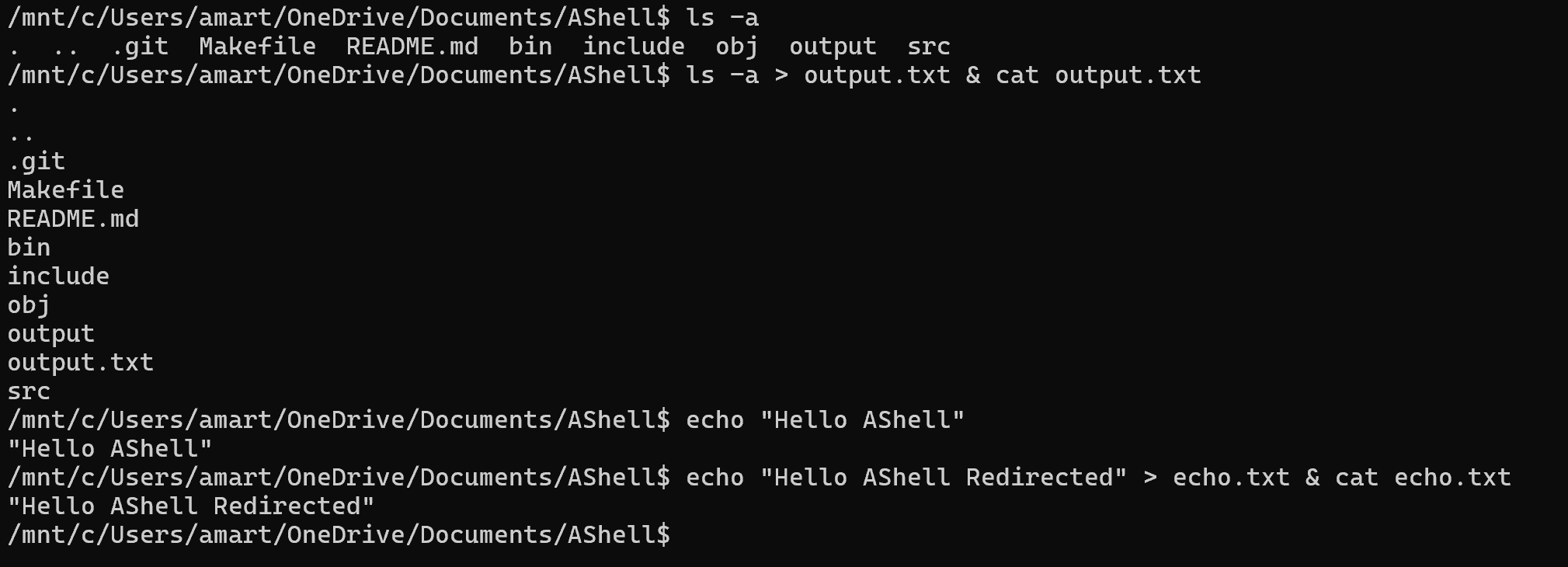
Before starting this project, the inner workings of a shell were somewhat mysterious to me. I could navigate one using classic Linux commands but couldn’t describe how the terminal itself worked. While a full, production-ready shell is far beyond what I created, peering under the hood was an insightful experience. I learned that a shell is simply a process that forks child processes while awaiting the next input. I also discovered that in a Unix environment, everything is a file, meaning you are essentially printing to stdout in your parent and child processes to display output in the terminal. Along the way, I picked up some concurrency tips and strengthened my C basics, particularly with pointers and memory management, which made the project both fun and educational.
GitHub repository: https://github.com/AndrewJMart/AShell
Escaping Tutorial Hell
To expand on my previous point, many people, including myself at times, struggle to break free from tutorial hell. As I continue to push myself, I encourage you, if you are in the same spot, to take that leap. Let your creativity shine and start a project on your own. It can be as stupid as an ASCII GIF Generator cough cough . The important part is that you truly challenge yourself.
I also recommend resisting the urge to rely on AI. While large language models are amazing resources, I have stopped using them entirely for my projects. Progress may feel slower, but there is something incredibly satisfying about looking at a finished product you built yourself. Memorizing syntax isn’t the goal, but it is equally important not to become a “third-party programmer” who relies entirely on others’ code.
Push yourself and trust yourself. Spend the time to debug the error messages that come up—it strengthens your critical thinking and programming skills in ways that tutorials never will.